
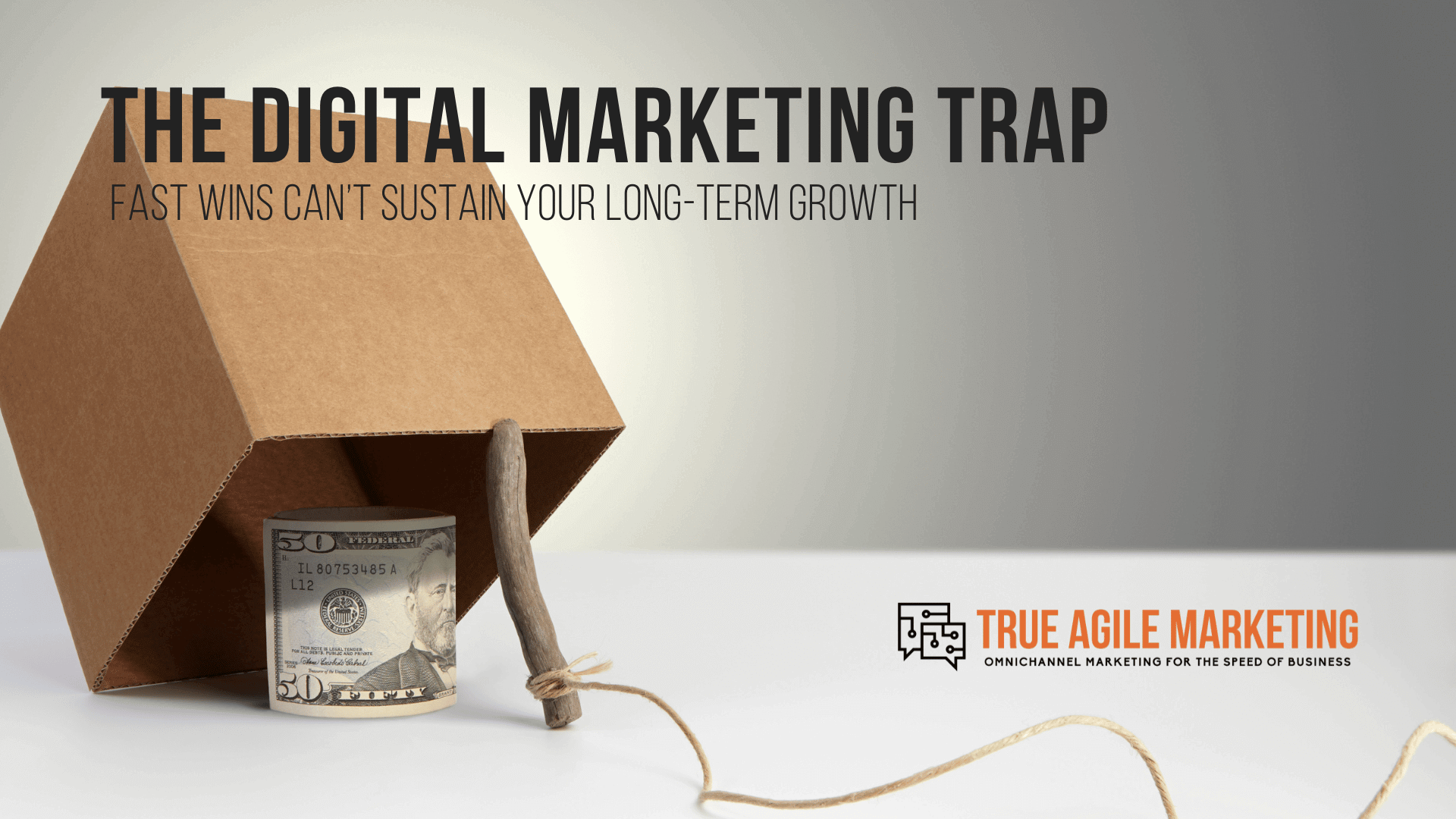
Investing every dollar into digital marketing is a trap many startups fall into, but one that can be corrected with the right strategy. Gaining market share, aligning sales for success, and understanding how you differentiate is essential. Digital marketing should be part of your overall marketing strategy–not the only tactic.
In today’s ever changing landscape and rush to gain attention and buy-in for customers online, companies are aggressively investing into digital marketing. But at what cost? Having a strong digital marketing presence is important for any well rounded marketing plan, but putting all your eggs in one basket is not prudent long-term.
Marketing for any startup, technology solution, or product requires an omnichannel and well rounded approach. Casting a wide net on social media and digital venues can not only be costly, but it neglects to align your message and marketing to support your sales team.
At True Agile Marketing, we take a holistic approach to building go-to-market and marketing strategies. We explore your product roadmap, examine the competition, review your pricing strategy, and align marketing to support your sales team’s success. If you are solely focused on digital, you are missing most of the elements that can impact your brand and product’s success.
Marketing is about understanding your audience, your competitive landscape, the consideration set, your sales strategy, and aligning marketing approaches to build strong lead generation and solutions to support ongoing sales success.
Where we stand out is getting to know your business and tightly aligning with sales to unpack and understand where the key objections to landing sales contracts are creating traps for sales to fall short. Our team is also versed in the Rob Williams, “the SaaS Playbook”; April Dunford’s “the Sales Pitch”; and Steli Efti “Enterprise Sales for Startups” sales approaches. We are also Alexander Osterwalder “Business Canvas/Model and Value Proposition” trained via the Strategyzer method and Blue Ocean strategy. We get sales and are uniquely positioned to align with them.
You can hire a young, freshly out of school marketer to run your digital marketing-but that talent will not be able to sustain your business as you navigate building core strategy for investors, additional funding or to help propel your business to the next level. If you trade the full scope marketing needs of the business for digital quick wins, you will soon discover you have bigger gaps to fill for sales and sustained growth.
A Great Marketing Strategy Considers:
• Current Sales Data
• Current Sales Prospecting/Lead Attribution
• Current Pricing
• Competitive Landscape
• Sales Assets (demos, sales pdfs , pre/post demo follow-up)
• Active Sales-Focused Website
• Market Share
• Marketing Automation
• Sales/Marketing CRM
• Lead Generation
• Understanding Your Value Proposition & How You Differentiate
• Consistent Content Creation for Socials, etc.
• Brand Loyalty
• Brand Building & Reach
• Current Customer Base Satisfaction & Feedback
• SWOT (Strengths, Weaknesses, Opportunities, Threats) Analysis
• ROI of Digital Marketing Invest to Date & Opportunities
• Partner Alignment & Opportunities for Collaboration
• Trade Partnerships & Opportunities
• Alignment with Prospects Throughout the Consideration Set
• Identifying the Right Prospects and Markets to Sell Into
• Alignment with C-Suite KPIs and Metrics
• Aligning Sales with Production to Get Products to Market
• Establishing UAT and Beta Environments to “Test” Features
If your team is struggling to align sales with production, or needs a strong strategy to align marketing for future funding or investment, contact us today.